Exhibit 3.3
2018Gender Shades
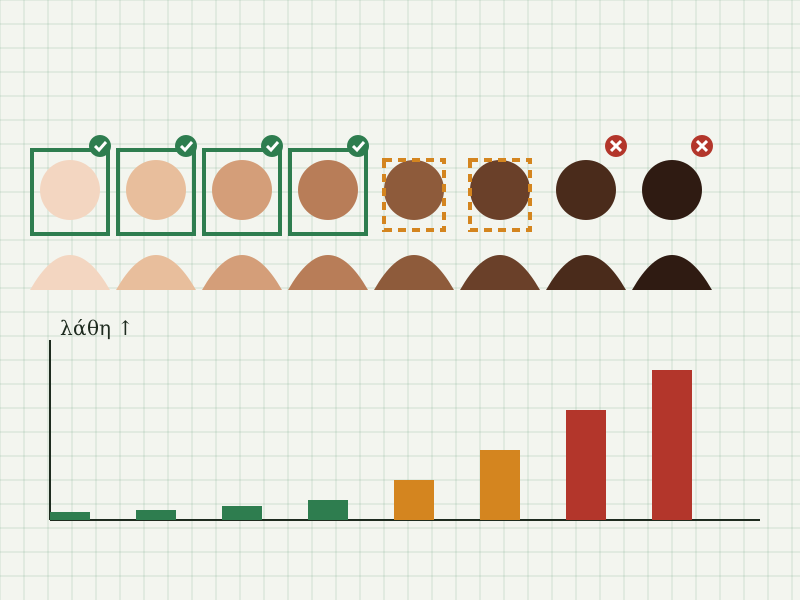
Joy Buolamwini and Timnit Gebru show that commercial face-analysis systems make far more errors for darker-skinned women than for lighter-skinned men. The result exposes the consequences of unrepresentative data and uneven system performance.
Why it is in the museum
Machine learning changes the problem: instead of writing every rule, we provide data and examples. Their gaps and biases can pass into the model too.
What supports this exhibit
Primary research paper
Large differences in error rates across demographic groups in commercial gender-classification systems.
Main source: Buolamwini, J. & Gebru, T. (2018), Gender Shades, PMLR 81.
What to keep in mind: Primary evaluation of deployed systems.
Ask the exhibit
This small guide uses only the information documented on this exhibit page. If your question goes beyond that evidence, it will say so instead of inventing an answer.
Start with one of the suggested questions above, or type your own.